
Blog
Modular Kitchen vs Carpenter-Made Kitchen in Delhi: 10-Year Cost, Repairs and Resale Value
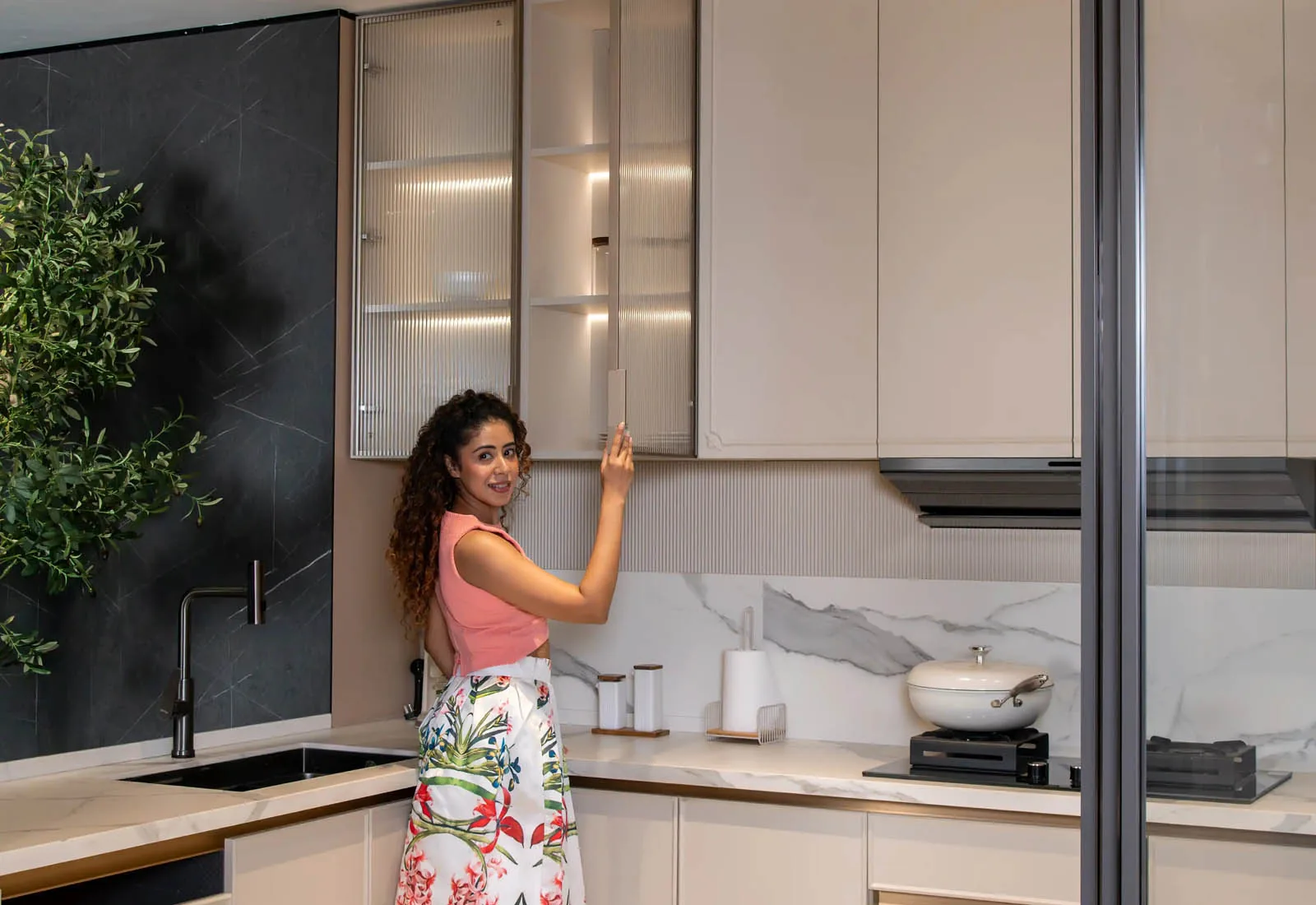
If you are planning a kitchen in Delhi, you will hear two opposite opinions. Some people say a carpenter-made kitchen is solid, cheaper and customisable. Others say modular is cleaner, faster and longer-lasting. Both are partly right. This guide compares them fairly, including where a carpenter-made kitchen is the better choice, and gives you a worksheet to compare the 10-year cost for your own home.
What is the difference between a modular and a carpenter-made kitchen?
A modular kitchen is built from standardised cabinet units made in a factory with machine-cut panels, machine-sealed edges and pre-fitted hardware. The units arrive at your home and are assembled and fixed on site. Sizes are made to fit your plan.
A carpenter-made kitchen (also called a site-made or fabricated-on-site kitchen) is cut, assembled and finished by carpenters inside your home or in a nearby workshop, usually from plywood or block board with laminate or paint on the surface.
The core difference is where and how the parts are made. A factory can hold tight tolerances and repeat the same quality on every unit. A carpenter can adapt to any wall and any shape, but quality depends on the individual craftsman and on site conditions such as dust and humidity.
How do modular and carpenter-made kitchens compare?
| Factor | Modular (factory-made) | Carpenter-made (site-made) |
|---|---|---|
| Upfront cost | Usually higher | Usually lower |
| Finish consistency | Machine-cut, even gaps and edges | Depends on the carpenter and site conditions |
| Edge sealing | Machine edge banding | Often hand-applied or finished with paint or laminate |
| Hardware | Specified brand and series, written in the quote | Varies, so you must specify and check |
| Design flexibility | Made to size, within the system's rules | Highly flexible for odd walls and shapes |
| Work on site | Fitting and assembly, with less cutting | Cutting, sanding and finishing at home, with dust and noise |
| Time | Production first, then fast installation | Starts immediately, but can run long on site |
| Warranty | Usually written, from a company | Often informal, from the individual |
| Repairs and spares | Parts and hardware are standard | Matching old work can be difficult |
| Resale appeal | Branded and well-finished kitchens appeal to buyers | Depends entirely on quality |
These are tendencies, not rules. A poorly made modular kitchen can be worse than a well-made carpenter kitchen, and the reverse is also true. That is why the checklist later in this guide matters more than the label.
What affects kitchen durability in Delhi?
Delhi's climate is hard on kitchens: dusty winters, hot summers and a humid monsoon. Five factors decide how well any kitchen survives.
- Board. The core material and its thickness. Compare options in HDHMR vs plywood for kitchens.
- Edge sealing. Moisture enters through raw edges first. Machine edge banding is more consistent than hand finishing. OPPEIN panels are edge-banded on imported Homag machines.
- Hardware. Hinges and runners carry daily load. Read the hardware you don't see and Blum vs Hettich.
- Finish. The surface must handle oil, heat and cleaning. See kitchen finishes compared.
- Installation quality. A good unit installed badly will still fail. Level, alignment and sealing at joints matter.
For a deeper look at design choices that last, read designing a kitchen that ages well.
When does a carpenter-made kitchen make sense?
Be honest about the cases where it is the better choice:
- Very irregular rooms, such as older homes with uneven walls, odd angles or unusual alcoves
- A tight budget where the priority is a working kitchen now
- A short stay, such as a rental or a home you plan to sell soon
- Small repairs or additions, where matching an existing carpenter-made kitchen is easier
- When you have a trusted carpenter whose past work you have seen and whose materials you can specify
If you go this way, specify the board, the edge treatment and the hardware brand in writing, exactly as you would for a modular kitchen.
When does a modular kitchen make sense?
- You want a consistent, precise finish with even gaps and sealed edges
- You want named hardware and a written warranty
- You want less dust, noise and mess at home, because most cutting happens in a factory
- You plan to stay for many years or to sell the home and want it to show well
- You care about design, such as handle-less fronts, integrated appliances and premium surfaces
If you are choosing between standard modular and imported design, read Italian kitchen design in India. For compact homes, see small modular kitchen design.
Can I combine both?
Yes, and many good homes do. A common approach is to use a factory-made modular kitchen and wardrobes for the main joinery and a carpenter for an unusual alcove, a bespoke shelf or a feature that falls outside a standard system. Ask your designer how to handle the junction between the two so that the finishes and levels match.
Eight things to check, whichever route you choose
- Board type and thickness in the carcass
- How edges are sealed and whether you can see a cut sample
- Hardware brand and series, written in the quote
- Finish and how it handles oil and heat, tested on a sample
- Countertop material and joints. See quartz vs granite countertops
- Timeline in writing, with what can delay it
- Warranty in writing, with who responds and how
- A completed project you can see, or a past client you can speak to
Where does OPPEIN fit?
OPPEIN Delhi NCR is the Indian arm of a global cabinetry manufacturer with 31 years of manufacturing experience. Our kitchens are made at OPPEIN's own factory, which states that about 95% of its equipment is imported from Germany and Italy, shipped to India and installed by our own trained installers. Design, measurement, installation and after-sales are handled by the same Delhi NCR team.
It is a premium, factory-made route and it takes longer than a local carpenter: about 12 to 15 weeks from design consultation to installation. In return you get machine-made consistency, specified hardware and Italian-led design. See the materials we work with on the materials page, learn more about OPPEIN Delhi NCR and browse the product range.
Frequently asked questions
Is a modular kitchen better than a carpenter-made kitchen?
Not always. Modular kitchens usually give more consistent finish, named hardware and written warranties. Carpenter-made kitchens give more flexibility for irregular rooms and a lower upfront cost. The better choice depends on your room, budget and plans.
Is a carpenter-made kitchen cheaper?
Usually at the start. Over 10 years, repairs, hardware replacement and refinishing can narrow the gap, so compare total cost of ownership using the worksheet above.
Which kitchen lasts longer in Delhi?
The one with the better board, sealed edges, quality hardware and good installation. Category matters less than these details, so check each one in writing.
Does a modular kitchen add resale value?
A well-finished, branded kitchen usually shows better to buyers and tenants. The effect depends on the quality of the work and the market, and we cannot promise a specific value.
Which is faster, modular or carpenter-made?
A local carpenter can start immediately. A factory-made imported kitchen like OPPEIN's takes about 12 to 15 weeks from design to installation, but on-site work is shorter and cleaner.
Can a carpenter-made kitchen be upgraded later?
Often yes, for example by replacing hardware or countertops. Matching old work can be harder, so plan upgrades with the original carpenter or a designer.
Talk to a designer before you decide
Visit the Experience Centre at Ground Floor, A-53, Okhla Phase 2, New Delhi 110020, Monday to Saturday, 10:30 to 19:00, or call and WhatsApp +91 84476 77346. Book a free design consultation, see the kitchen range and read more guides on the OPPEIN blog.