
Blog
Kitchen Shutter Finishes Compared (2026): Laminate vs Acrylic vs PU vs Lacquer for Indian Kitchens
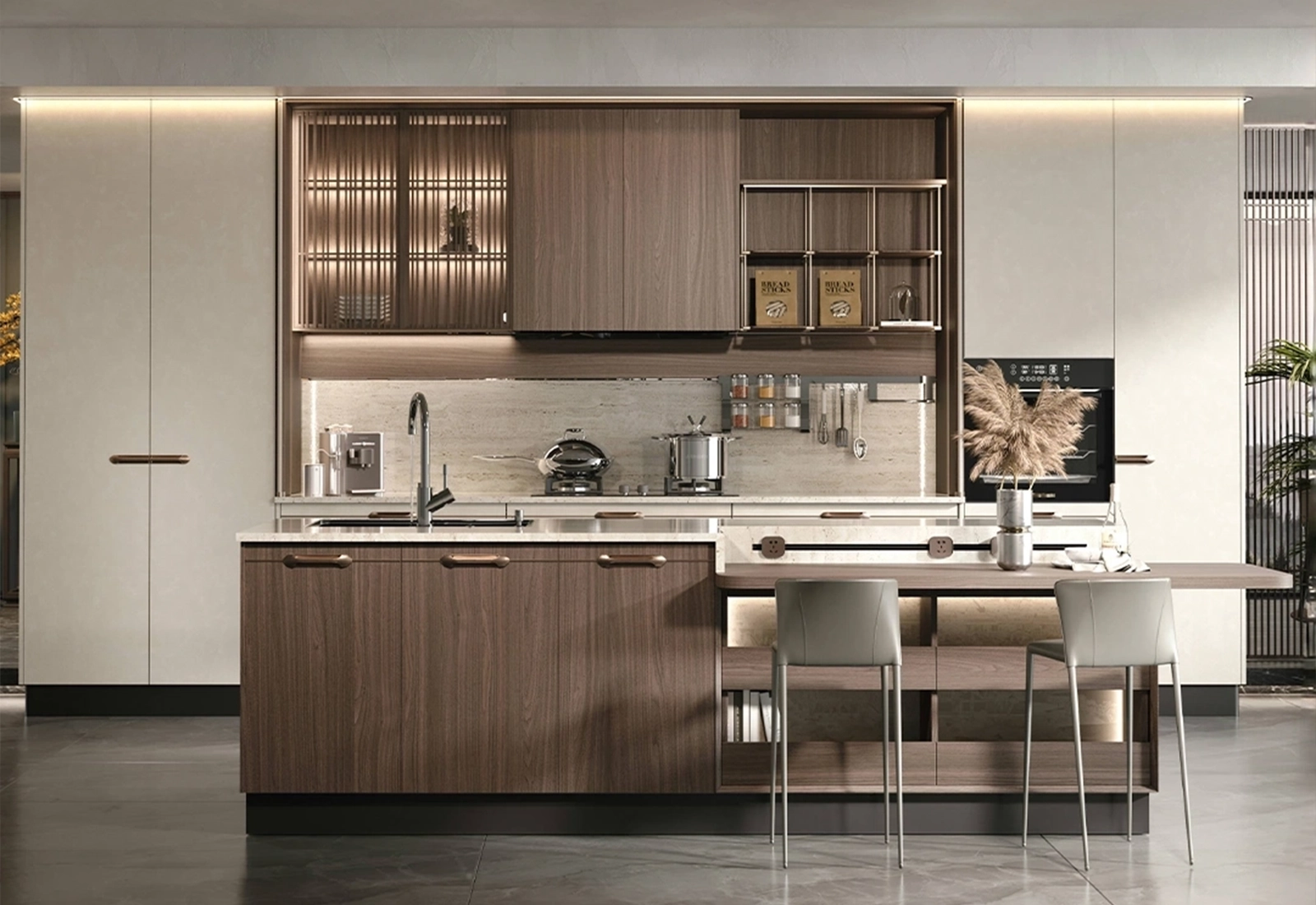
The shutter is the face of your kitchen. It is what guests see, and what you wipe every day. It also takes the worst of Indian cooking: oil mist, steam, heat from the hob and humid monsoons.
Vendors use many names, such as acrylic, PU, UV, lacquer and membrane, and the same word can mean different things in different shops. This guide explains the common finishes in plain words, and tells you where each one works best.
What are the main kitchen shutter finishes?
OPPEIN's materials page lists ten door-panel finishes. Here are the ones most buyers compare, with short descriptions:
- Melamine finish: decorative paper with melamine resin, pressed onto particleboard or MDF. Cost-effective and durable.
- Laminate (HPL): multiple layers of kraft paper bonded with phenolic resin under high heat and pressure. Tough and scratch-resistant.
- Thermofoil (PVC): PVC film vacuum-pressed onto MDF, which allows 3D shapes with wrapped edges.
- PP foil: polypropylene foil; an eco-friendly alternative to PVC with similar looks, and recyclable.
- Lacquer / painted: multi-layer paint with primer, colour coats and clear topcoat, in matte, semi-gloss or high gloss.
- Powder coating: electrostatic powder cured under heat; extremely durable and scratch-resistant.
- UV lacquer: UV-cured finish with exceptional hardness and a mirror-like gloss.
- Wood veneer: thin slices of real wood bonded to a base; natural grain with more stability than solid wood.
- Solid wood: premium hardwoods such as oak, walnut, cherry and maple.
- Sintered stone sheet: ultra-thin stone sheets, with marble looks and without the weight.
About "acrylic": in the Indian market, acrylic usually means a high-gloss acrylic-faced panel. It is not on OPPEIN's standard finish list above. If you like that glossy look, ask your designer for the closest OPPEIN option, such as UV lacquer or high-gloss lacquer.
Comparison table: which finish suits which kitchen?
| Finish | Look | Durability | Oil and stain resistance | Humidity | Repairability | Relative cost |
|---|---|---|---|---|---|---|
| Melamine | Wide colours and woodgrains | Good | Good | Good when edges are sealed | Hard to repair | Low |
| HPL laminate | Wide range, textured options | Very good | Very good | Very good | Hard to repair | Low to medium |
| Thermofoil (PVC) | Smooth or shaped doors | Good | Good | Good | Edge lift is possible near heat | Medium |
| PP foil | PVC-like looks | Good | Good | Good | Hard to repair | Medium |
| Lacquer (matte) | Rich, smooth colour | Good with care | Good, wipe quickly | Good | Can be re-sprayed | High |
| UV lacquer (gloss) | Mirror finish | Very hard surface | Good; shows fingerprints | Good | Hard to repair | High |
| Powder coating | Smooth, tough | Excellent | Excellent | Excellent | Hard to repair | Medium to high |
| Wood veneer | Natural grain | Good | Needs sealing | Good with a quality seal | Can be refinished | High |
| Solid wood | Warm, premium | Good; can move with humidity | Needs sealing | Can swell if not treated | Can be refinished | Very high |
The cost column shows relative position, not price. Prices differ by brand and thickness, so compare like for like.
Matte or gloss: which is better for Indian cooking?
Many matte and textured finishes make everyday fingerprints and minor marks less noticeable than high-gloss surfaces. However, scratch resistance and ease of cleaning depend on the specific finish and coating. They look calm and modern, and they suit daily cooking. This is why matte lacquer and textured laminate lead the 2026 trends.
Gloss finishes reflect light and make small kitchens look bigger, but they show every smudge. If you pick gloss, plan for weekly wiping, and avoid it on lower cabinets near the hob.
Our tip: use matte on lower units and gloss only on tall or upper units, where your hands do not reach.
How do finishes handle Indian conditions?
Oil and steam
Finishes with a hard, sealed surface, such as HPL and powder coating, resist oil best. Wipe spills the same day with a soft damp cloth and mild soap. Avoid harsh scrubbers on any finish.
Delhi humidity and monsoon
Moisture enters through unsealed edges, not through the face. Look for tight, factory edge-banding on every shutter, particularly near the sink. OPPEIN edge-bands on Homag machines in its own factory.
Heat
Keep shutters away from direct heat. Fit a heat shield or a stone backsplash behind the hob, and avoid placing a kettle or air-fryer directly under a wall unit.
Sunlight
Strong sun can fade or yellow some pale glossy finishes over time. If your kitchen has a west-facing window, ask your designer about UV-stable options.
Which finish should you choose?
- Rental or budget-conscious, daily cooking: HPL laminate or melamine.
- Easy upkeep and a modern look: PP foil or matte laminate.
- Premium, designer look: matte or gloss lacquer, or UV lacquer.
- Warm and natural: wood veneer on selected doors, with laminate elsewhere.
- Maximum toughness: powder-coated shutters.
- Mix and match: laminate for lower cabinets, lacquer or veneer for tall units and feature walls.
If you are still comparing board quality behind the finish, read our guide on HDHMR vs plywood. To see how collections combine finishes, look at the Lumi Haven and Seville collections (both 2026) on our products page.
Common finish mistakes
- Choosing a finish from a photo without touching a sample.
- Using high gloss on lower units in a daily-frying kitchen.
- Ignoring edge quality, because the face looks perfect.
- Mixing too many finishes. Two or three is plenty.
- Skipping sample approval in writing before production.
Why trust OPPEIN Delhi NCR for finishes?
- A wide palette: 10 door-panel finishes, plus a 43-design stone countertop series in five looks.
- Italian-led design: collections are developed at the Milan Design Centre, so colour and texture pairings are tested before you see them.
- Free samples: you can book an appointment at the Experience Centre or ask for samples to be sent across Delhi NCR.
- Accountable team: Meet the people who design, install and service your kitchen.
Frequently asked questions
Which finish is best for a modular kitchen in India?
HPL laminate and PP foil are the most practical for daily use. Lacquer and veneer are better for a premium look.
Is acrylic better than laminate?
Acrylic gives a glossier look; laminate is usually tougher and easier to maintain. The better choice depends on your cooking and taste.
What is a PU finish?
PU (polyurethane) is a spray-applied coating that gives a smooth, painted look. Similar results come from lacquer finishes.
Is matte better than gloss in a kitchen?
For daily Indian cooking, matte is easier to live with because it hides fingerprints and oil marks.
Which kitchen finish is best for humid areas?
Any finish with well-sealed edges. HPL and powder coating perform especially well.
Can I mix two finishes in one kitchen?
Yes. A common pairing is matte laminate on base units and lacquer or veneer on tall units.
Touch the finishes before you decide
Visit the Experience Centre at Ground Floor, A-53, Okhla Phase 2, New Delhi 110020 (Mon–Sat, 10:30–19:00), or request free samples.