
Blog
Italian Kitchen Design Explained (2026): What Makes It Different, and Is It Worth It in India?
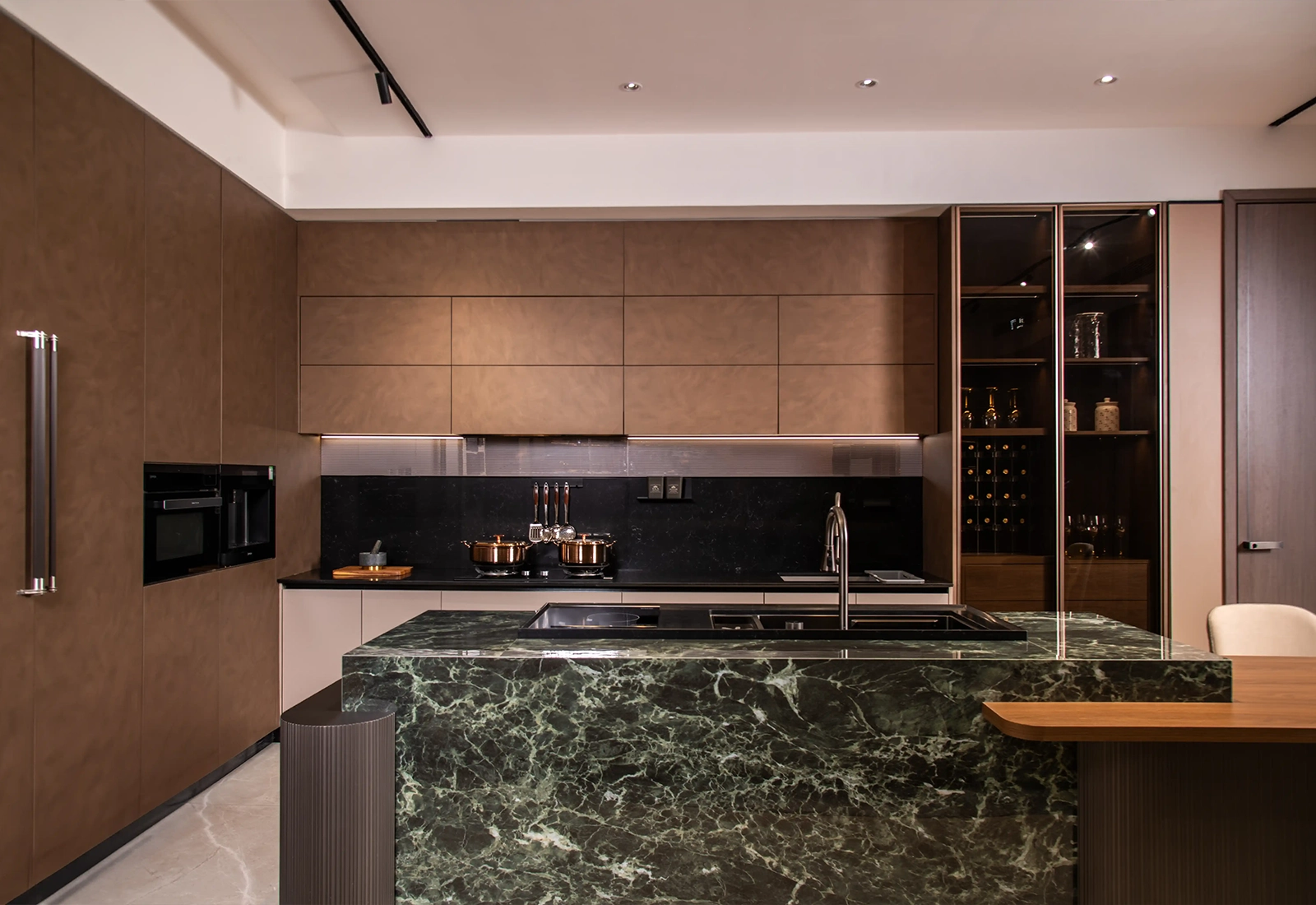
"Italian kitchen" is one of the most abused phrases in Indian interiors. Some shops use it to mean any glossy kitchen with an imported handle. Real Italian design is more specific, and it is more about thinking than about decoration.
This guide explains what makes a kitchen Italian, how it compares with German and Indian styles, and what you should and should not pay extra for.
What is Italian kitchen design?
Italian kitchen design is a way of planning a kitchen as part of the home's architecture. The kitchen is treated like furniture, not like a utility room. The focus is on clean lines, quality materials and details you feel more than see.
Its core principles are:
- Restrained proportion. Lines are simple and balanced. Nothing is added for decoration alone.
- Handle-less profiles. Recessed grips or push-to-open mechanisms keep the fronts flat and calm.
- Precise shadow gaps. Thin, even gaps between doors make the kitchen look like one piece.
- Honest materials. Real texture and tone, such as woodgrain, stone and matte surfaces, instead of imitation shine.
- Integrated tall units. Pantry and appliance walls that look like architecture.
- Warmth with structure. Warm woods and soft colours paired with cool stone or metal.
Italian vs German vs typical Indian kitchens
| Feature | Italian style | German style | Typical local carpenter kitchen |
|---|---|---|---|
| Design focus | Look, proportion, integration | Engineering, function, modular precision | Cost and speed |
| Fronts | Often handle-less, minimal | Handle-less or simple handles | Visible handles, varied detailing |
| Finish | Matte, textured, lacquer, veneer | Matte, laminate, lacquer | Plywood with laminate, often on site |
| Gaps and alignment | Very tight and even | Very tight and even | Varies by carpenter |
| Hardware | Premium European | Premium European | Mixed, depends on budget |
| Customisation | High | Moderate to high | High but inconsistent |
| Typical cost | High | High | Low to medium |
The lines between the styles blur in practice. Many good European kitchens combine Italian looks with German-grade hardware and tolerances.
What do you actually pay for in an Italian-style kitchen?
If you are paying a premium, make sure it goes to these things, not to the label:
- Design time. Layout planning, 3D views and detailing take hours that cheaper kitchens skip.
- Factory precision. Edges, joints and door alignment are done by machine, not by hand.
- Panel and finish quality. Low-emission boards, durable finishes and sealed edges.
- Hardware. Soft-close hinges and drawer systems that last. See our Blum vs Hettich comparison.
- Installation and after-sales. Trained installers and a team that answers when something goes wrong.
When comparing premium kitchen quotations, look beyond the overall price. Ask what is included in the materials, cabinet construction, hardware, finishes, installation and after-sales support so you can evaluate the complete offering.
Is OPPEIN an Italian brand?
This is a fair question, and it deserves a straight answer. OPPEIN is a global cabinetry manufacturer, headquartered in China, with 31 years of manufacturing experience and presence in 130+ countries. Its design direction comes from the Milan Design Centre, an in-house Italian design team led by Marco Bortolin, who has more than 20 years of experience in architecture and interior design. Collections are designed there and then engineered for manufacture on OPPEIN's global platform.
In other words: Italian design thinking, global manufacturing scale, and a local Delhi NCR team for measurement, installation and after-sales. We describe it this way on purpose, because trust is built on being clear about where things come from. You can read more on our about page.
Italian-inspired collections from OPPEIN
Our 2026 collections show the Italian approach in practice:
- Seville (2026): light smoky woodgrain with cool platinum-silver grey, which is Italian minimalism balancing warmth and structure.
- Lumi Haven (2026): pale oak, soft stone and warm diffused light carried from kitchen to closet.
- Molan (2024): quiet, tactile modernism with matte surfaces and deep tones.
- Fioli (2025): relaxed elegance held to a modern minimalist discipline.
Browse the full series on our products page.
How does Italian design adapt to Indian cooking?
Pure European kitchens are often designed for lighter cooking. Indian homes need extra planning for oil, steam and bulky cookware. Good adaptation includes:
- A stronger chimney and short duct for heavy frying.
- Deeper drawers for pressure cookers, kadhais and tiffin sets.
- Wet and dry zones that keep masalas and grains away from the sink.
- Wipe-clean finishes, such as matte lacquer or HPL, on lower units.
- A tall pantry wall for monthly groceries.
A useful reference is our post on designing a kitchen that ages well.
Who should choose an Italian-style kitchen?
It makes sense if you:
- Are building or renovating a home you plan to live in for many years.
- Value clean design and tight finish more than the lowest price.
- Want one team to handle design, production and installation.
- Prefer a kitchen that matches your wardrobes and doors, as part of a whole-home interior.
It may not be right if your budget is very tight, your lease is short, or you want to change everything in two years.
Why trust OPPEIN Delhi NCR?
- Manufacturing depth. A factory covering 3 million square metres, with 95% of equipment imported from Germany and Italy.
- Certified quality. ISO 9001, ISO 14001, SGS testing, E1 and CARB Phase 2 compliance.
- A small, senior local team. Every project is reviewed by Director Aditi Bansal before it leaves the Experience Centre.
- Delivery at scale. See the Andaz Delhi, Lodha NCP and North Sydney AURA projects.
Frequently asked questions
What is Italian kitchen design?
A style that uses restrained proportions, handle-less fronts, tight shadow gaps, honest materials and integrated storage to make the kitchen part of the home's architecture.
What is the difference between Italian and German kitchens?
Italian design leads with look and proportion. German design leads with engineering and function. Many modern kitchens combine both.
Are Italian kitchens good for Indian cooking?
Yes, if they are adapted with strong ventilation, deep drawers and wipe-clean finishes.
Is OPPEIN an Italian or Chinese brand?
OPPEIN is a global manufacturer headquartered in China. Its design direction comes from the Milan Design Centre in Italy.
How long does an OPPEIN kitchen take?
From design consultation to installation, usually about 12 to 15 weeks depending on scope.
Are handle-less kitchens practical?
Yes, with a good profile and quality hardware. Recessed grips usually work better than push-to-open for lower drawers.
See an Italian-inspired kitchen in person
Visit the Experience Centre at Ground Floor, A-53, Okhla Phase 2, New Delhi 110020 (Mon–Sat, 10:30–19:00) or book a design consultation.