
Blog
Quartz vs Granite Kitchen Countertops in India (2026): Which Is Better for Indian Cooking?
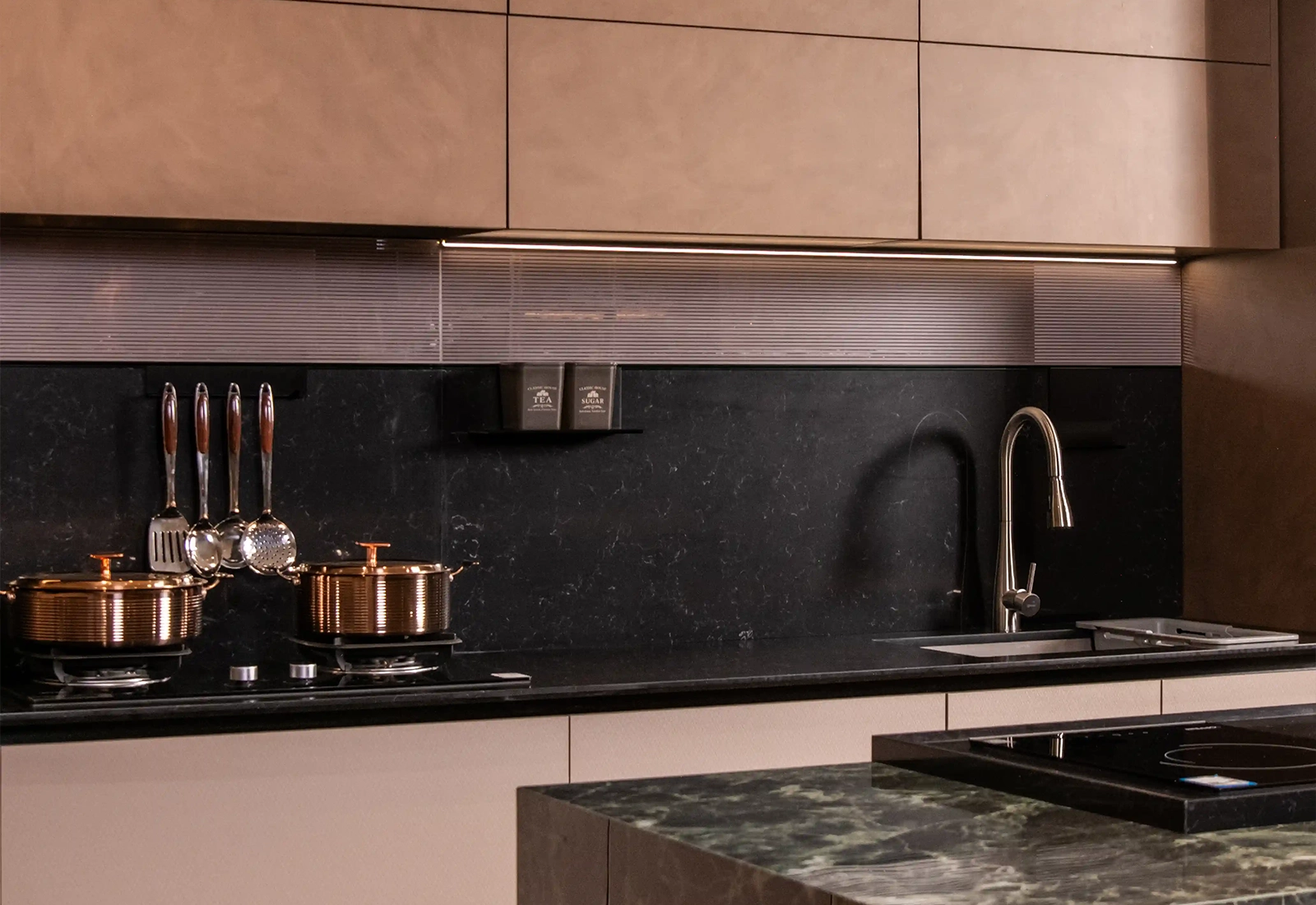
Your countertop takes more punishment than any other part of the kitchen. Turmeric stains it, hot kadhais land on it, knives mark it, and lemon and tamarind etch it. Yet people often pick a worktop from a small sample in a showroom and discover its weaknesses a year later.
Here is what really separates quartz, granite and sintered stone, in the conditions of an Indian kitchen.
What is quartz?
Quartz countertops are engineered stone. They are made from crushed natural quartz bound with resin and pigments, then pressed into slabs. The result is a uniform, non-porous surface that comes in many colours and patterns, including marble looks. Well-known quartz brands include Caesarstone and Silestone.
What is granite?
Granite is a natural stone cut from quarries and polished into slabs. Every slab is different, with its own veining and speckles. It is hard and very heat-tolerant, but it is naturally porous and needs sealing.
What is sintered stone?
Sintered stone is made from natural minerals that are compacted and fired at very high temperatures. It is thin, extremely hard, and resists heat, scratches and stains. OPPEIN offers a sintered stone sheet for fronts and surfaces, with marble looks without the weight.
Quartz vs granite vs sintered stone
| Factor | Quartz | Granite | Sintered stone |
|---|---|---|---|
| Material | Engineered (stone + resin) | Natural stone | Compacted minerals fired at high heat |
| Stain resistance | Very good (non-porous) | Good if sealed | Excellent |
| Heat resistance | Good, but avoid direct hot pans; use a trivet | Very good | Excellent |
| Scratch resistance | Very good | Very good | Excellent |
| Sealing needed | No | Yes, periodically | No |
| Look | Uniform, wide pattern choice including marble looks | Natural, varied veining | Marble, concrete and stone looks |
| Seams | Fewer visible, depends on layout | Visible seams are possible | Large slabs, fewer seams |
| Weight | Heavy | Heavy | Lighter in thin sheets |
| Typical cost | Medium to high | Low to medium | High |
| Best for | Daily Indian cooking, modern kitchens | Budget kitchens, traditional look | Heavy cooking, premium designs |
"Typical cost" is a relative guide only. Prices depend on brand, thickness and edge profile.
Which countertop handles Indian cooking best?
Turmeric, oil and tea stains
Quartz and sintered stone generally offer strong stain resistance and are relatively easy to maintain. However, turmeric, oil and other cooking spills should still be cleaned promptly, following the manufacturer's care instructions. Granite can absorb oil and turmeric if the sealer has worn off.Some granite countertops benefit from periodic sealing, depending on the stone's porosity and existing treatment. Follow the supplier's care recommendations rather than a fixed resealing schedule.
Hot pans and kadhais
Granite and sintered stone handle heat very well. Quartz contains resin, which can mark or discolour under very high direct heat. Use a trivet or a stainless-steel hot-pan stand with any quartz countertop. This one habit prevents most quartz damage.
Chopping and scratches
All three are hard, but you should still use a chopping board. Knives dull on stone, and the board protects both.
Lemon, tamarind and acids
Acids can etch some natural stones. Quartz and sintered stone are far less affected. Wipe spills promptly in any case.
Cleaning
Warm water with mild soap is enough for quartz and sintered stone. Avoid harsh chemicals, bleach and abrasive pads on all stone surfaces.
How to choose: pick by your need
- I cook with a lot of oil and spice every day: quartz or sintered stone.
- I want the lowest maintenance: quartz or sintered stone.
- I place hot vessels straight from the stove: sintered stone or granite.
- I want a marble look without marble's stains: quartz or sintered stone in a Calacatta or Carrara pattern.
- My budget is tight: granite, with a good sealer.
- I want a seamless, modern look: large-format quartz or sintered stone slabs.
What does OPPEIN offer?
Our materials page shows the OPPEIN stone countertop series, with 43 designs across five looks: Calacatta, Carrara, Concrete, Designer and Natural. Our partnerships with brands such as Caesarstone and Silestone cover premium quartz surfaces. Your designer will help you match the stone to your cabinet finish. For finish pairing ideas, see our guide to kitchen design ideas.
Counter thickness and edge: small details that matter
- Thickness: 20 mm is common for quartz and granite; thicker edges (30 to 40 mm) look heavier and more premium.
- Edge profile: a slightly rounded edge is safer around children and chips less than a sharp one.
- Cut-outs: the sink and hob cut-outs are weak points. Ask the fabricator to round the inside corners and support the slab properly.
- Backsplash: a full-height stone backsplash behind the hob is easier to clean than tiles with grout lines.
Check these with your designer before the stone is cut. Mistakes at the cutting stage cannot be fixed.
Why trust OPPEIN Delhi NCR?
- Material partnerships: Caesarstone, Silestone, Blum and Hettich are listed on our materials page as partner brands.
- Global scale and testing: 31 years of manufacturing, and certifications such as ISO 9001 and SGS third-party testing.
- Free samples: book an appointment at the Experience Centre, or ask us to send samples across Delhi NCR.
- In-house team: from measurement to installation, handled by one team. Meet the team.
- Real projects: see how we deliver across 129 units at Andaz Delhi.
Frequently asked questions
Is quartz better than granite for a kitchen?
For most Indian kitchens, yes, because it is non-porous and needs no sealing. Granite is better for direct heat and tighter budgets.
Can I put a hot pan on a quartz countertop?
Not directly. Use a trivet or hot-pan stand, because the resin in quartz can discolour under high heat.
Does granite need to be sealed?
Yes, usually once or twice a year, depending on the stone and use.
Does quartz stain with turmeric?
Quartz resists turmeric much better than most surfaces. Wipe spills the same day and avoid leaving them for hours.
What is sintered stone?
A very hard engineered surface made from natural minerals fired at high heat. It resists heat, stains and scratches.
How long does a stone countertop last?
With normal care, quartz, granite and sintered stone can last for many years, and often outlast the cabinets.
See and feel the stone before you choose
Visit the Experience Centre at Ground Floor, A-53, Okhla Phase 2, New Delhi 110020 (Mon–Sat, 10:30–19:00), or talk to our design team to see full-size samples.