
Blog
Dust-Proof Kitchen Cabinets for Delhi's Pollution Season: Sealed Edges, Tight Gaps and a Cleaning Routine
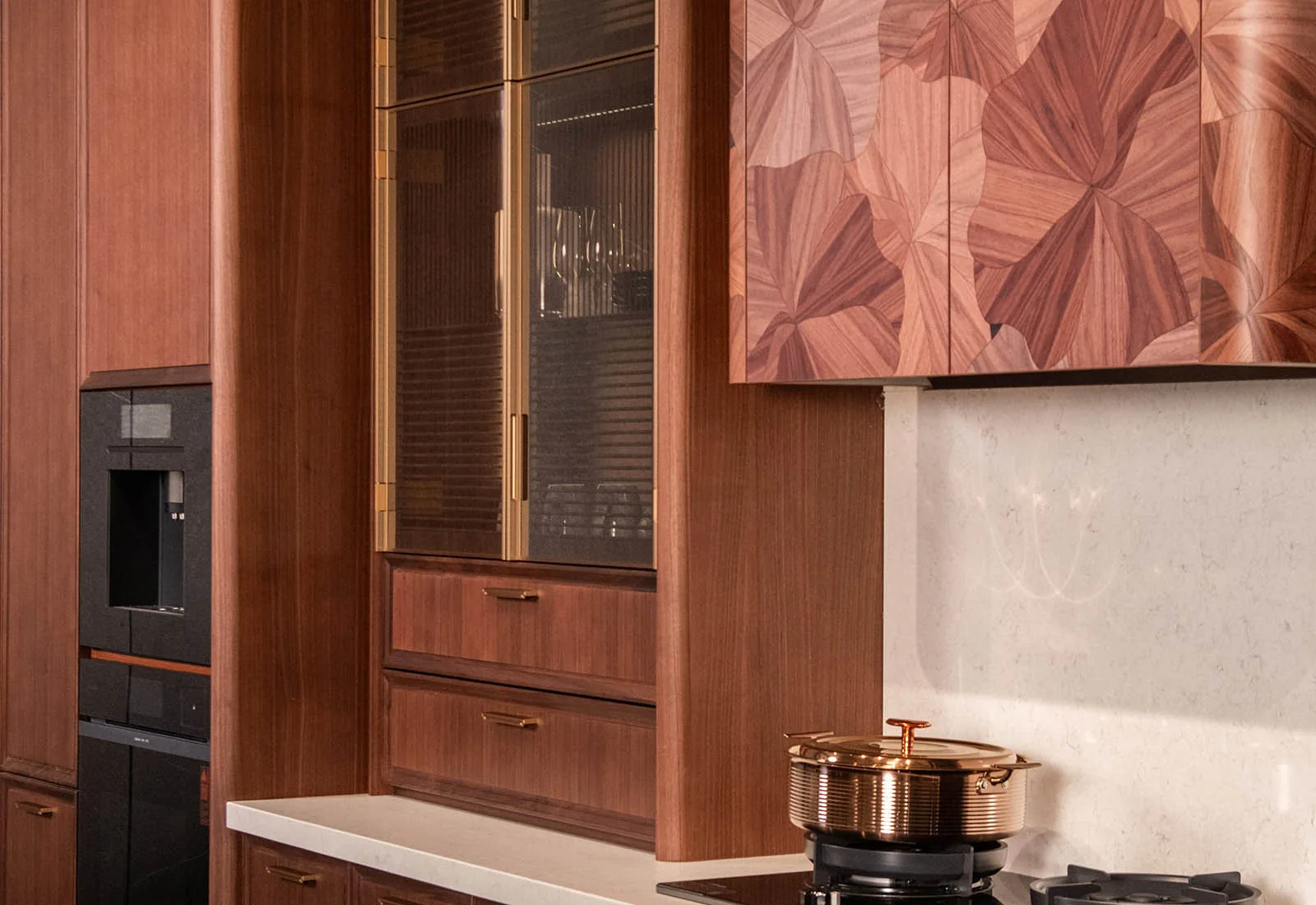
From October to January, Delhi's air carries more dust and fine particles than at almost any other time of year. It settles on counters, on shelves and inside cabinets that are not built well. In a kitchen, dust mixes with cooking oil to form a sticky film that is harder to remove than either one alone. This guide explains how dust enters a kitchen, which design choices keep it out, and how to clean cabinets without damaging them.
Can kitchen cabinets really be dust proof?
Not completely. Air moves through every home, and dust arrives through windows, doors and exhaust fans. What you can do is reduce the entry points and make the surfaces easy to clean. That is what a dust-resistant kitchen means in practice: fewer gaps, sealed edges and surfaces that wipe clean in seconds.
Why do Delhi kitchens get so dusty?
Four reasons stack together:
- Season. Smog and low wind in winter keep fine dust suspended near the ground.
- Construction. Delhi is a city of ongoing building and renovation, and dust travels.
- Open windows and exhaust fans. The kitchen is the room with the most air movement because of the chimney, the exhaust and cooking ventilation.
- Cooking oil. Indian cooking releases fine oil vapour that makes surfaces slightly sticky, so dust sticks to them instead of blowing off.
Which construction details keep dust out of kitchen cabinets?
These five details matter more than the colour of the shutter.
| Detail | What it does | What to ask your kitchen maker |
|---|---|---|
| Sealed edge banding | Closes the raw edge of the board so dust and moisture cannot enter | How are edges sealed, and can I see a cut sample? |
| Tight, even shutter gaps | Leaves less room for dust to slip into the carcass | What is the gap tolerance between shutters? |
| Closed back panels | Stops dust entering from the wall side | Are the back panels fully closed? |
| Full plinth and skirting | Prevents dust and water sitting under the base units | How is the plinth fitted and sealed? |
| Soft-close hinges and drawers | Close fully every time, so doors do not sit slightly ajar | Which hardware brand and series is quoted? |
OPPEIN panels are edge-banded on imported Homag machines, and the factory runs on tight tolerances so that shutters, drawers and panels fit evenly. If you want to compare how board and edge quality affect a kitchen over time, read HDHMR vs plywood for kitchens and designing a kitchen that ages well.
Do open shelves collect more dust than closed cabinets?
Yes. Open shelves are exposed to every particle in the air, and in a kitchen they are also exposed to oil. Anything stored on them needs frequent wiping. For a Delhi home, a practical rule is to keep open shelving to a small accent area and to use closed cabinets or glass-fronted units for everyday items. If you love an open design, read our guide to open kitchen design in India to see how to balance openness with practicality.
Which kitchen finish is easiest to keep clean?
There is no single winner, because each finish has a different weakness.
- Gloss finishes reflect light and show dust and fingerprints more clearly, but wipe clean quickly.
- Matte finishes hide light dust but can hold oil if the surface is textured.
- Dark colours show dust faster than light or mid-tone colours.
- Textured finishes need a soft brush or cloth to clean the grooves.
OPPEIN works with ten finish families, including laminate (HPL), PP foil, lacquer, UV lacquer, thermofoil, powder coating, veneer and solid wood. Our guide to kitchen finishes compared explains how each performs, and the materials page shows the palette. Ask for samples and test them with your own fingers and a damp cloth.
Do handleless kitchens collect more dust?
Handleless kitchens have a groove or profile in place of a handle. That groove can collect dust and oil, so it needs to be wiped as part of your routine. The trade-off is that there are no handles to wipe around or to snag. Whether a handleless design suits your home depends on how you cook and clean, and we cover this in detail in our comparison of G-profile and J-profile systems.
How do I stop the sticky film near the hob?
The hob zone is where oil and dust combine. Three steps help:
- Use a chimney with an outside duct and clean the filters regularly. A chimney that only recirculates air leaves more oil in the room.
- Wipe the area daily while the oil is still fresh. Old oil hardens and attracts dust.
- Choose a backsplash and shutters that handle heat and are easy to wipe. Our guide to kitchen layout planning for Indian cooking explains where the hob and chimney should sit.
What is a simple cleaning routine for Delhi kitchen cabinets?
| When | What to do |
|---|---|
| Daily | Wipe the countertop and the hob zone with a damp cloth |
| Weekly | Wipe shutter fronts and handles or grooves with a soft microfibre cloth and mild soapy water, then dry |
| Monthly | Clean the insides of drawers and shelves, wipe the top of wall units and clean the chimney filter |
| Every season | Check hinges, drawer runners and edges for wear, and wipe the plinth |
A few cleaning rules protect the finish:
- Do not soak edges. Water at the edge of a panel is the fastest way to damage any board. Wipe, then dry.
- Avoid abrasive pads and harsh chemicals, especially on lacquer and gloss finishes.
- Wipe in the direction of the grain on wood veneer and textured finishes.
- Dry with a clean cloth so that dust does not stick to damp surfaces.
What about hardware and runners?
Dust and oil work into runners and hinges over time. Good-quality fittings are built to keep working in these conditions. OPPEIN uses Blum, Hettich and REHAU hardware. To understand why hardware matters, read the hardware you don't see and the comparison of Blum vs Hettich kitchen hardware.
Does the board material matter for a closed winter kitchen?
In winter, many Delhi families keep windows closed and spend more time indoors, so the materials around you matter. OPPEIN states that all its base materials are formaldehyde-free and that its panels are certified to low emission standards, including E1 and CARB Phase 2, with a formaldehyde level stated on the materials page. Ask any kitchen maker for emission certificates in writing, not just a verbal promise.
Checklist: 10 questions to ask before you order
- How are the edges sealed?
- Can I see a cut sample of an edge?
- What is the gap between shutters?
- Are the back panels and plinth closed?
- Which hardware brand and series are in the quote?
- Which finish is easiest to clean, and can I test a sample?
- How are handleless grooves cleaned?
- Where will the chimney duct exit?
- What emission certificates do the boards carry?
- Who handles installation and after-sales?
At OPPEIN, design, measurement, installation and after-sales are handled in-house by the Delhi NCR team, so you have one point of contact for any fit issue.
Frequently asked questions
Can kitchen cabinets be dust proof?
Not completely, but sealed edges, tight shutter gaps, closed backs and plinths and closed storage cut dust entry significantly. A wipe-clean finish keeps the rest under control.
How do I keep kitchen cabinets dust free in Delhi?
Choose sealed edges and closed storage, keep windows closed on high-pollution days, wipe fronts weekly with a microfibre cloth and clean the chimney filter monthly.
Do open shelves collect more dust?
Yes. Open shelves are exposed to dust and cooking oil, so keep them small and wipe them often, and use closed cabinets for everyday items.
Which kitchen finish is easiest to clean?
Smooth laminate, PP foil and UV lacquer wipe clean easily. Gloss shows dust and fingerprints more, while matte hides them but can hold oil if textured.
Why do kitchen cabinets get sticky?
Cooking oil vapour settles on surfaces and attracts dust. A chimney with an outside duct, daily wiping near the hob and regular cleaning prevent the build-up.
How often should I clean kitchen cabinets?
Wipe the hob area daily, shutter fronts weekly and do a deeper clean of insides, tops and filters monthly.
Build a kitchen that stays clean
Visit the Experience Centre at Ground Floor, A-53, Okhla Phase 2, New Delhi 110020, Monday to Saturday, 10:30 to 19:00, or call and WhatsApp +91 84476 77346. Book a free design consultation, browse the kitchen range, read about Italian kitchen design in India, learn about OPPEIN Delhi NCR and find more guides on the OPPEIN blog.