
Blog
Bathroom Vanity for Delhi's Hard Water: Materials That Don't Swell, Stain or Peel
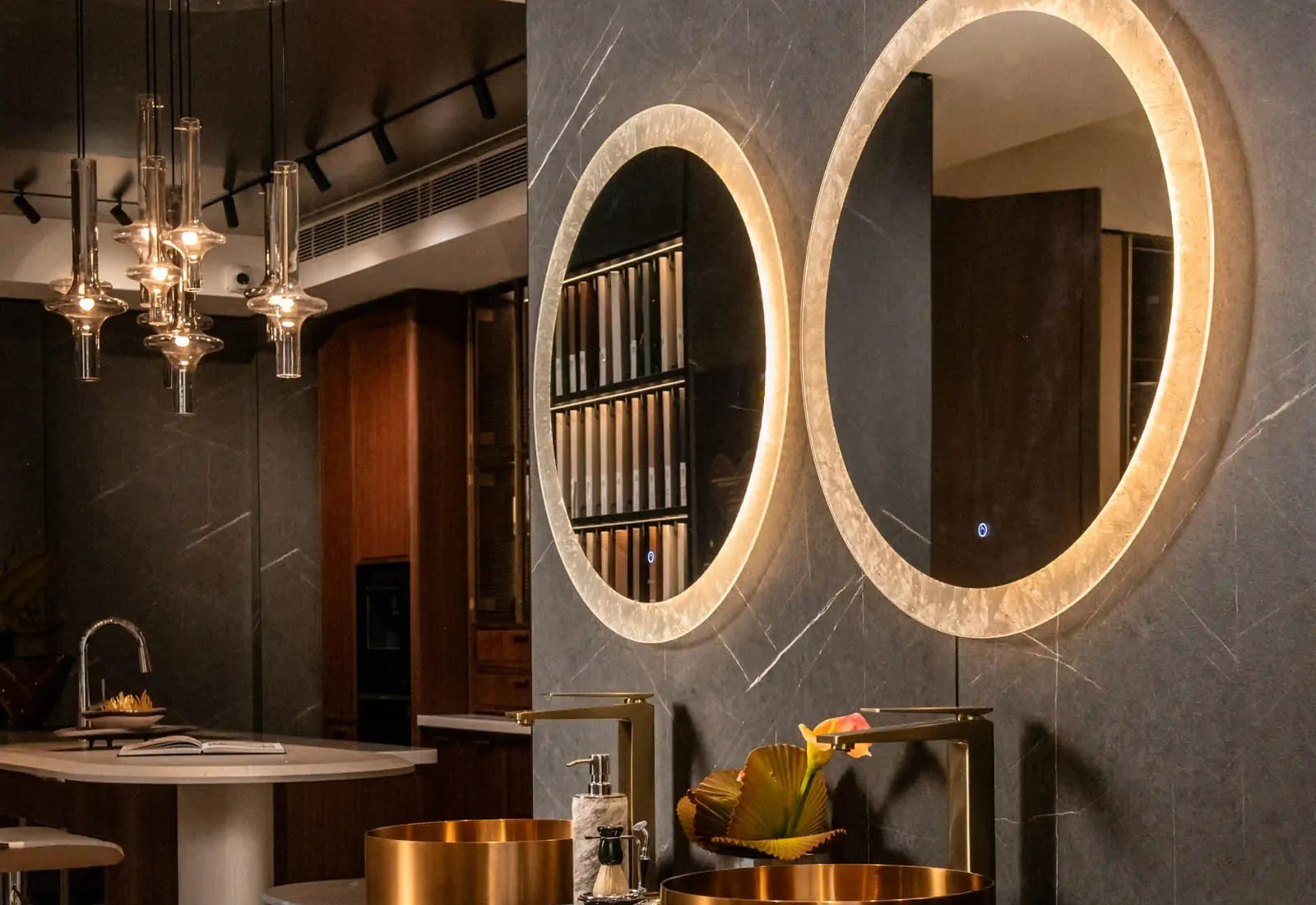
The bathroom is the hardest room in the house for any piece of wood-based furniture. There is constant humidity, daily splashes, soap, cleaning chemicals and, in many Delhi homes, hard water that leaves white limescale on every surface. A weak vanity swells at the edges, peels at the corners and stains within a year or two. This guide helps you choose one that does not.
Why do bathroom vanities fail in Delhi?
Three things attack a vanity at the same time:
- Moisture. Steam and splashes enter through raw board edges and cut-outs for taps and pipes.
- Hard water. Dissolved minerals dry as white limescale on tops, taps and basins, and slowly dull the surface.
- Cleaning chemicals. Harsh acids and abrasive pads strip finishes and open pores.
The result is swelling near the plumbing, bubbled laminate, stained tops and drawers that stick. Almost all of it is preventable with the right material and detailing.
Which material is best for a bathroom vanity?
| Material | Moisture behaviour | Good for | Watch out for |
|---|---|---|---|
| PVC / WPC board | Highly water-resistant, does not swell | Wet bathrooms, budget-friendly builds | Can feel less premium and may flex under heavy loads |
| HDHMR | Dense and moisture-resistant when edges are sealed | Most Indian bathrooms with proper sealing | Quality varies, so ask for edge sealing and grade |
| Marine-grade (BWP) plywood | Good with proper sealing and laminate | Larger vanities that need strength | Unsealed cut-outs can still absorb water |
| Standard MDF or particle board | Poor in wet areas | Dry furniture only | Swells quickly at edges and plumbing cut-outs |
For a detailed look at how boards behave in Indian conditions, read HDHMR vs plywood. The same moisture principles apply in a bathroom, with the added challenge of constant humidity.
What is the best vanity top for hard water?
The top takes the most abuse. Choose a non-porous surface that resists stains and wipes clean.
- Quartz. Dense, non-porous and available in many looks. OPPEIN's range includes Caesarstone and Silestone surfaces.
- Sintered stone. Very hard and heat-resistant, with marble-like looks.
- Solid surface and ceramic. Seamless basins and tops that clean easily.
For the differences between stone types, see quartz vs granite countertops. OPPEIN's Stone Countertop Series offers 43 designs, which you can browse on the materials page. The same limescale logic applies in the kitchen; see hard water in Delhi kitchens.
6 details that stop a vanity from swelling
- Sealed edges. Every cut edge should be sealed, especially around plumbing cut-outs.
- Silicone at joints. Where the top meets the wall and the basin meets the top, a clean silicone bead keeps splashes out.
- A raised base or wall-hung design. Keeping the cabinet off the wet floor removes the most common cause of swelling.
- Moisture-resistant hardware. Rust-resistant hinges and runners last longer in humid air.
- Ventilation. An exhaust fan or window helps the room dry after use.
- Plumbing planned with the cabinet. Pipes and traps should be positioned so that the cabinet is not constantly damp.
Wall-hung or floor-standing vanity: which suits a small bathroom?
| Wall-hung | Floor-standing | |
|---|---|---|
| Look in a small room | Lighter and more open | Heavier and more traditional |
| Cleaning the floor | Easy to mop underneath | Harder to clean around the base |
| Moisture risk | Lower, because the base is off the floor | Higher if the floor stays wet |
| Storage | Slightly less in some designs | Often more |
| Wall strength | Wall must carry the load | Not a concern |
For most small and medium Delhi bathrooms, a wall-hung vanity is the safer and cleaner choice, provided the wall can carry the load.
What size should a bathroom vanity be?
Typical planning ranges are about 600 to 750 mm wide for a compact bathroom, 900 mm or more for a master bathroom, 400 to 500 mm deep and about 800 to 850 mm high at the top. Your designer will adjust these to your room, door swing and plumbing.
How do I clean a vanity and remove limescale?
| When | What to do |
|---|---|
| After use | Wipe splashes from the top and the front, and dry the tap |
| Weekly | Clean the basin and top with a mild cleaner and a soft cloth |
| Monthly | Descale taps and the basin edge with a mild, product-safe descaler, rinse well and dry |
Avoid harsh acids and abrasive pads on stone, lacquer and gloss finishes. Always check the care instructions for your top, and test any cleaner on a hidden spot first.
What does OPPEIN offer in bathroom vanities?
OPPEIN Delhi NCR designs water-resistant vanities and bathroom storage built for Indian humidity, as part of the same material language we use for kitchens, wardrobes and interior doors. You can see the range on the products page. Our team handles design, measurement, installation and after-sales in-house, and an OPPEIN project takes about 12 to 15 weeks from the first consultation to installation. For finish options see our kitchen shutter finishes comparison, and for hinge and drawer quality read Blum vs Hettich kitchen hardware.
8 questions to ask before buying any vanity
- What is the core material and its grade?
- How are cut edges sealed, especially near plumbing?
- What is the top made of, and is it non-porous?
- Is the vanity wall-hung or floor-standing, and what does the wall need to carry?
- Which hardware brand and series is used?
- Which finish is used, and how does it handle cleaners?
- Who installs it, and who fixes it if a leak starts?
- What does the warranty say about moisture?
Frequently asked questions
Which material is best for a bathroom vanity in India?
PVC/WPC is the most water-resistant. Good-quality HDHMR and marine-grade plywood also work well when edges are fully sealed. Avoid standard MDF and particle board in wet areas.
Can HDHMR be used in a bathroom?
Yes, if the edges and cut-outs are sealed and the surface is protected. Ask for the grade and the sealing method.
How do I stop a bathroom vanity from swelling?
Use a moisture-resistant core, seal all edges, keep the base off the floor with a wall-hung design and wipe splashes daily.
How do I remove limescale from a vanity top?
Wipe daily, and use a mild, surface-safe descaler monthly. Rinse and dry afterwards, and avoid harsh acids and abrasive pads.
Is a wall-hung vanity better for a small bathroom?
Usually yes. It keeps the base off the wet floor, is easier to clean around and makes the room feel larger.
See vanities in person
Visit the Experience Centre at Ground Floor, A-53, Okhla Phase 2, New Delhi 110020, Monday to Saturday, 10:30 to 19:00, or call and WhatsApp +91 84476 77346. Book a free design consultation.