
Blog
Wedding-Season Wardrobes: How to Store Lehengas, Sarees, Sherwanis and Jewellery Without Damage
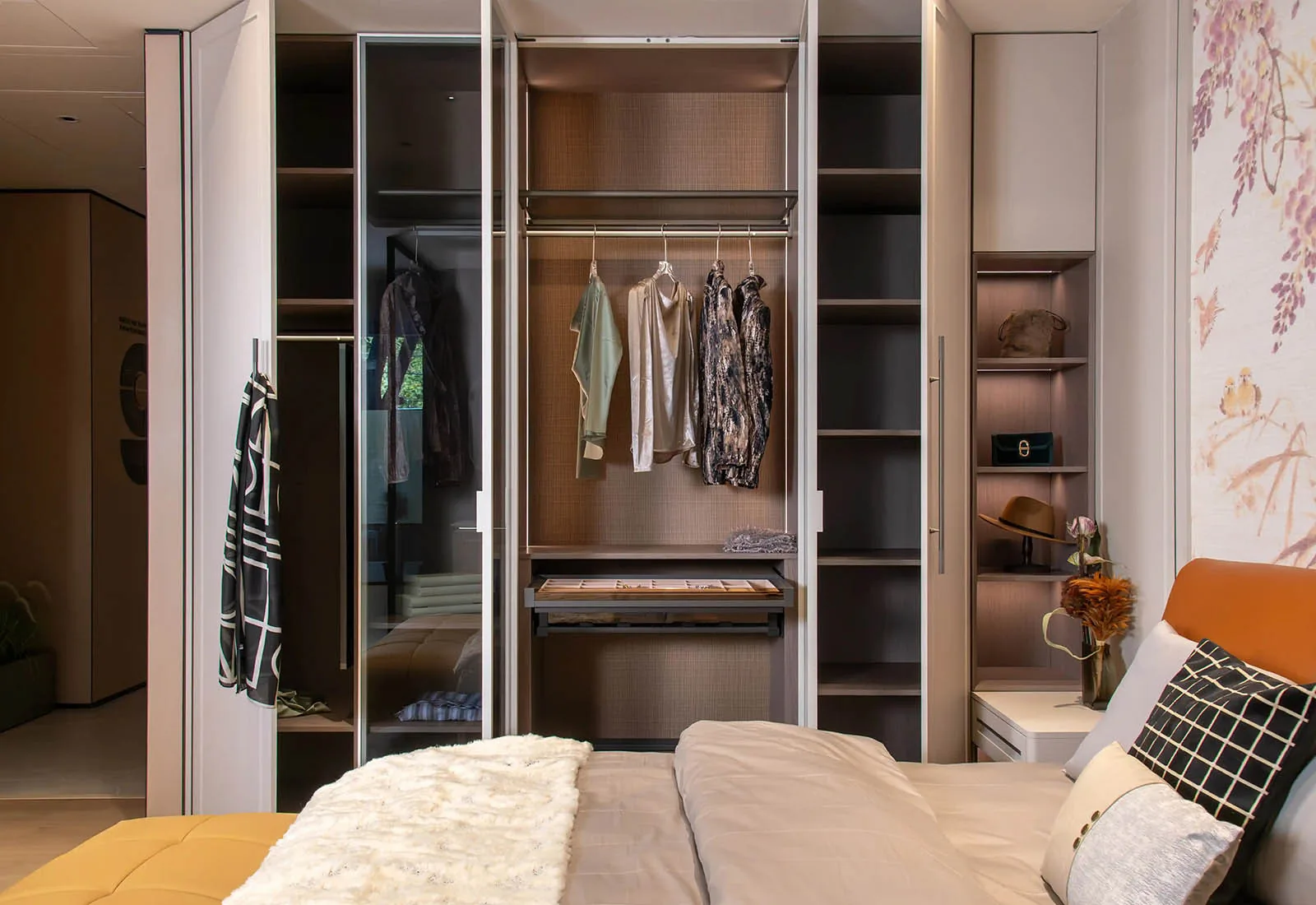
Wedding season in Delhi begins as the weather cools and runs through the winter. Families suddenly need to store a bridal trousseau, sangeet outfits, silk sarees, sherwanis and a lot of jewellery, often in a wardrobe designed for everyday clothes. Heavy embroidery gets crushed, silk creases, zari tarnishes and jewellery gets tangled. This guide shows how to plan a wardrobe that protects expensive clothes and makes them easy to find.
Why do wedding clothes need a different wardrobe plan?
Because they are heavy, long, delicate and valuable.
- A bridal lehenga can weigh several kilograms and can be ruined by hanging it from the shoulders.
- Silk sarees crease along fold lines and can cut at the same crease if never refolded.
- Sherwanis, achkans and gowns are long, so the hanging space must be tall.
- Zari, sequins and stone work snag on rough edges and loose fabrics.
- Jewellery is small, expensive and easy to mix up or tarnish.
A wardrobe built for everyday clothes treats these items like any other. A wedding wardrobe treats each one on its own terms.
What goes where? A zone-by-zone guide
The ranges below are typical planning figures. Your designer will adjust them to your clothes and your room.
| Item | Best storage | Typical planning size |
|---|---|---|
| Heavy lehengas | Wide shallow drawer with acid-free tissue, or hung by the skirt loops | Drawer width of about 80 to 90 cm; long-hang rail about 130 to 150 cm |
| Sarees | Pull-out shelves or saree drawers, folded | Full wardrobe depth, short stacks so silk is not crushed |
| Sherwanis, achkans, suits | Long-hang rail with breathable garment covers | About 130 to 150 cm clear hanging height |
| Gowns and long dresses | Long-hang section | Up to about 160 cm clear hanging height |
| Blouses, kurtas, shirts | Short-hang | About 90 to 100 cm |
| Jewellery | Shallow velvet-lined drawers with dividers | About 8 to 10 cm interior height |
| Dupattas, stoles, scarves | Slim pull-out or rolled in a drawer | Narrow drawer with dividers |
| Shoes, clutches, potlis | Shoe pull-out and closed shelf | Adjustable shelf height |
How do I store a heavy lehenga without damaging it?
The two safest methods are flat storage and loop hanging.
- Flat in a wide, shallow drawer. Fold with acid-free tissue between layers so that embroidery does not press into itself. Add a muslin cover.
- Hung by the skirt loops. Most lehengas have a loop at the waist. Hanging by the loops transfers the weight to the waistband, not the delicate shoulder or blouse. Use a wide hanger.
- Keep the blouse separate. Store the choli and dupatta in a drawer so that their weight does not pull the skirt.
- Avoid sealing in plastic. A garment bag should be breathable cloth, not thin plastic.
- Refold on a schedule. Take items out and refold every few months to avoid permanent creases.
Ask your designer to plan the drawer width and the long-hang height around your actual lehenga before the design is approved.
How should sarees be stored in a wardrobe?
Sarees are the most common storage problem in Indian wardrobes. A few principles make a big difference:
- Pull-out shelves beat fixed shelves. You can see the whole stack and lift out a saree without disturbing the rest.
- Keep stacks short. Piling a dozen silks together crushes the ones at the bottom.
- Separate fabrics. Silk, cotton, georgette and heavily embroidered sarees each prefer their own space.
- Use muslin or cotton wraps. Silk needs to breathe.
- Refold along new lines. Every few months, refold a stack so that no crease takes all the wear.
- Avoid hanging heavy silks for long periods, because the weight can stretch the fabric.
For guidance on how a larger layout can include dedicated saree sections, read walk-in wardrobes for Indian homes.
Can I add a jewellery drawer to my wardrobe?
Yes, and it is one of the best-value upgrades. Ask for:
- Shallow drawers with velvet or soft-lined inserts so pieces do not scratch
- Adjustable dividers for necklaces, earrings, bangles and rings
- A soft-close, full-extension runner so the drawer glides without rattling
- Easy-clean lining, because Delhi dust gets into everything
One important caution: a wardrobe drawer is not a safe. Keep high-value jewellery in a bank locker or a proper home safe, and tell your designer if you want space allocated for a safe inside the wardrobe. They can plan the opening and reinforce the shelf.
How tall should a wardrobe be for lehengas and sherwanis?
Most modern wardrobes are floor-to-ceiling, so the real question is how you divide the height. A good plan keeps one long-hang section of about 130 to 150 cm for sherwanis, gowns and long coats, then uses the rest of the height for short-hang, drawers and a loft. If you have a very long garment, tell the designer so that the long-hang bay can be extended.
Also, make the hanging rail strong enough. Bridal outfits are heavy, and a thin rail can sag over time. That is why hardware matters. Read the hardware you don't see to understand what keeps a wardrobe working for years. OPPEIN uses Blum, Hettich and REHAU fittings, which you can see on the materials page.
What design details protect fabric?
The difference between a wardrobe that looks good and one that looks after your clothes is in the details:
- Smooth, well-sealed edges so zari and silk do not snag. OPPEIN edge-bands its panels with imported Homag machines.
- Moisture-resistant boards. See HDHMR vs plywood to compare how boards behave in humid months.
- Soft interior lighting, so you can see colours properly without heat
- Internal mirrors or a pull-out mirror, so you can check an outfit without carrying it across the room
- Easy-clean finishes. See kitchen finishes compared for how finish families differ, as the same families apply to our wardrobes
- Ventilation, so that clothes do not hold damp air
Wall-to-wall wardrobe or walk-in closet for a wedding wardrobe?
A walk-in closet is the ideal for a bridal trousseau because you can lay out outfits, see everything at a glance and dedicate sections to different events. If you do not have a spare room, a well-planned wall-to-wall wardrobe with sliding or hinged doors can carry most of the same features. Compare both options in our guide to walk-in wardrobes for Indian homes.
How early should I plan a wedding wardrobe?
An OPPEIN project takes about 12 to 15 weeks from the first design consultation to installation, because wardrobes are manufactured at OPPEIN's factory and shipped to India before our own installers fit them. If your wedding is in the next few months, start the design conversation as soon as the date is fixed, and tell the designer the date on day one so that they can give you an honest answer on whether it is realistic.
Our Delhi NCR team handles design, measurement, installation and after-sales in-house. For an idea of the scale we work at, see the Andaz Delhi Serviced Apartments project.
Wedding wardrobe checklist
- List every outfit type and count them
- Measure your longest garment
- Plan a long-hang bay of 130 to 150 cm for sherwanis and gowns
- Add saree pull-out shelves
- Add a wide shallow drawer for lehengas
- Add shallow velvet-lined jewellery drawers
- Plan space for a safe or locker separately
- Choose soft-close, full-extension runners
- Confirm your timeline: 12 to 15 weeks from design to installation
Frequently asked questions
How do I store a heavy lehenga in a wardrobe?
Store it flat in a wide shallow drawer with acid-free tissue, or hang it by the skirt loops on a wide hanger. Never hang it from the shoulders of the blouse.
How should sarees be stored in a wardrobe?
Folded on pull-out shelves in short stacks, wrapped in muslin or cotton, with silk separated from other fabrics. Refold them every few months to avoid permanent creases.
How tall should the hanging space be for a sherwani?
Plan a long-hang bay of about 130 to 150 cm of clear height. Gowns may need up to about 160 cm.
Can I add a jewellery drawer to a wardrobe?
Yes. Ask for shallow, velvet-lined drawers with dividers and soft-close runners. Keep valuable jewellery in a safe or bank locker.
Is a walk-in closet better for a bridal wardrobe?
A walk-in gives you the most room and visibility, but a well-planned wall-to-wall wardrobe can include the same storage features if space is limited.
How long does it take to get a wardrobe from OPPEIN?
About 12 to 15 weeks from the first design consultation to installation. Tell the designer your wedding date at the start.
Plan your wedding wardrobe with us
Visit the Experience Centre at Ground Floor, A-53, Okhla Phase 2, New Delhi 110020, Monday to Saturday, 10:30 to 19:00, or call and WhatsApp +91 84476 77346. Book a free design consultation, explore the wardrobe and walk-in closet range, learn about OPPEIN Delhi NCR and read more on the OPPEIN blog.